
Living Cost in Japan for Nepali Students
Tuition gets most of the attention when planning to study in Japan. But the ongoing cost of living in Japan is what actually shapes your day-to-day budget once you arrive. This guide breaks down realistic monthly expenses, so you can plan with real numbers instead of guesswork.
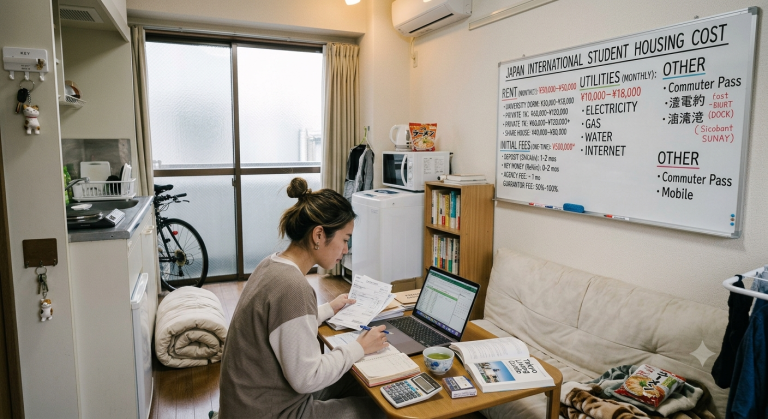
Cost of Living in Japan: The Big Picture
The cost of living in Japan varies depending on the city, lifestyle, and accommodation you choose. Students living in Tokyo or Osaka generally spend more than those studying in smaller cities. Where you live can have a significant impact on your monthly budget.
Below is a realistic estimate of the cost of living in Japan per month for international students.
| Expense | Estimated Monthly Cost (NPR) |
|---|---|
| Accommodation | 20,000–40,000 |
| Food | 20,000–30,000 |
| Transportation | 5,000–10,000 |
| Utilities & Phone | 5,000–8,000 |
| Personal & Miscellaneous | 5,000–10,000 |
Compare living costs across Japanese cities using the Numbeo Japan Cost of Living Index .
Accommodation Costs
Accommodation is usually the largest part of the cost of living expenses in Japan. Your monthly rent depends on several important factors:
- City: Tokyo and Osaka are generally more expensive than cities like Fukuoka or Sendai.
- Housing Type: Student dormitories usually cost less than private apartments.
- Location: Central areas have higher rent than suburban neighborhoods.
Many international students begin their studies in dormitories or shared accommodation before moving into private apartments after becoming familiar with their local area.
Food Costs
Food plays a major role in the cost of living in Japan. Students who cook meals at home usually spend much less than those who eat at restaurants regularly. Japanese supermarkets, discount stores, and convenience stores provide affordable options for students managing a monthly budget.
Cost of Living in Japan and Salary: Can Part-Time Work Help?
Many students wonder about the relationship between the cost of living in Japan and salary. International students are generally allowed to work up to 28 hours per week after receiving permission from immigration authorities.
Popular part-time jobs include restaurants, convenience stores, supermarkets, hotels, and retail shops. Although earnings vary depending on location and working hours, part-time employment can help cover a significant portion of your monthly living expenses.
Read our guide on Part-Time Jobs in Japan for Nepali Students to learn more about salaries, work opportunities, and legal requirements.
Budgeting Tips for International Students
- Choose a city outside Tokyo or Osaka to reduce your monthly living expenses.
- Stay in student dormitories during your first year to save on accommodation costs.
- Cook meals at home regularly instead of eating out.
- Take advantage of student discounts on transportation, shopping, and entertainment.
- Track your spending during your first few months to build a realistic monthly budget.
The cost of living in Japan for international students is generally similar to that of local residents for everyday expenses. Housing choices remain the biggest factor affecting your overall monthly budget.
Planning to study in Japan? Explore our Cost of Studying in Japan from Nepal guide for tuition fees and one-time expenses.
Frequently Asked Questions
What is a realistic monthly budget for a student in Japan?
Is Tokyo much more expensive than other Japanese cities?
Can part-time work realistically cover living expenses?
Does the cost of living in Japan for international students differ from local residents?
Plan Your Monthly Budget With Confidence
Understanding the cost of living in Japan helps you manage your finances and avoid unnecessary stress after you arrive. Our experienced counselors can help you estimate your monthly expenses and prepare a realistic budget before you begin your studies.
Ready to plan your journey? Book a free consultation with A One International Educational Consultancy. You can also explore our Cost of Studying in Japan from Nepal guide to understand tuition fees, visa expenses, and other one-time costs.
Book a Free Consultation